
Updated on 19 Μαρτίου, 2026
Using De Bono’s thinking hats in art!
Using De Bono's thinking hats in art!
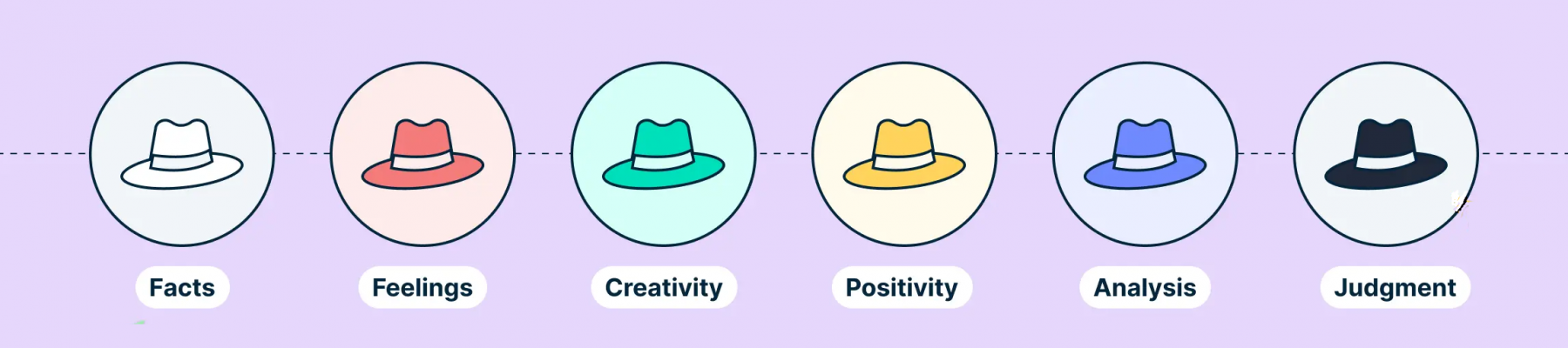
Using the Six Thinking Hats by Edward de Bono in art provides a structured, multi-perspective approach to creation and critique, separating:
- objective analysis,
- emotional reaction,
- creative brainstorming, and
- critical evaluation.
This technique helps artists overcome creative blocks, improve decision-making, and explore new concepts without getting stuck in one mindset, such as excessive self-criticism, as outlined by Global Leaders Institute and this YouTube video.
The Six Hats in Art Practice:
- White Hat (Facts & Data): Focuses on objective, technical details—what materials are being used, the size of the canvas, the lighting, or the specific techniques required.
- Red Hat (Feelings & Intuition): Allows the artist to express raw emotions, gut reactions, and subjective feelings about the artwork without needing to justify them, according to UniSA.
- Black Hat (Risks & Critical Judgment): Identifies potential pitfalls, weaknesses, and structural issues, helping to prevent artistic failure or "unintended consequences".
- Yellow Hat (Benefits & Positivity): Searches for the potential of an artwork, focusing on its strengths, value, and optimistic possibilities, notes LinkedIn.
- Green Hat (Creativity & Alternatives): Promotes "blue-sky" thinking to generate new, unconventional ideas, explore new techniques, and move beyond the initial concept, as explained by UniSA.
- Blue Hat (Process Control & Overview): Manages the entire creative process, deciding which hat to wear next and summarizing the artistic direction, according to Jeff Kavanaugh and this YouTube video.
Key Tips for Using the Hats:
- Don't Let the Black Hat Dominate: Avoid letting critical thinking (Black Hat) crush creative brainstorming (Green Hat), says this YouTube video.
- Use as a Sequence: Start with the Blue Hat to plan the session, gather data with White, and explore with Green, suggests Jeff Kavanaugh.
- Use for Self-Critique: Apply this framework to personal projects to act as your own team of consultants, as shown on YouTube.
Allow for Emotional Input: The Red Hat is essential for acknowledging, rather than ignoring, subjective feelings in art.
Parallel Thinking
«The biggest enemy of thinking is complexity, for that leads to confusion. When thinking is clear and simple, it becomes more enjoyable and more effective. The Six Thinking Hats concept is very simple to understand. It is also very simple to use. » (Eduard de Bono, p.p. 133)