
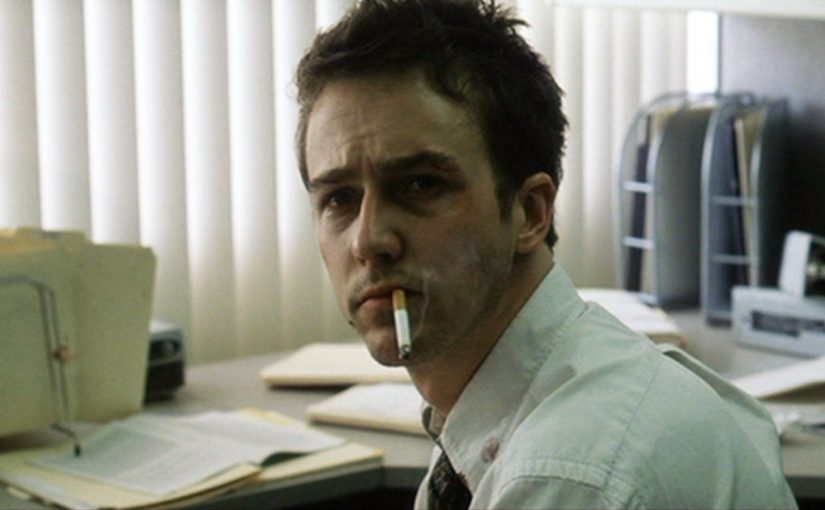
edward norton and what made him want to star in fight club
Edward Norton stars in Fight Club, the 1999 film directed by David Fincher, based on the novel by Chuck Palahniuk. Norton plays the unnamed protagonist, often referred to as "The Narrator," a disillusioned office worker who suffers from insomnia and dissatisfaction with his consumer-driven life.
In the film, The Narrator meets a charismatic and anarchistic soap salesman named Tyler Durden, played by Brad Pitt. Together, they form a secret underground fight club that grows into something far more dangerous and chaotic, challenging the norms of society and masculinity.
Norton’s portrayal of the character is central to the film’s exploration of identity, mental health, and consumerism. One of the most iconic aspects of Fight Club is the twist, where it’s revealed that Tyler Durden is actually a figment of the narrator's imagination, representing his repressed desires and frustration with his life.
The movie initially had a mixed reception but has since become a cult classic, with Norton’s performance often highlighted as a key part of its success. It explores deep psychological and societal themes, and Norton’s portrayal of The Narrator is crucial in conveying the film's unsettling atmosphere.
Edward Norton is a versatile and critically acclaimed actor known for his work in films like Primal Fear (1996), American History X (1998), and Birdman (2014). He's also known for his complex, often intense performances and his ability to dive deep into complicated characters. Born on August 18, 1969, in Boston, Massachusetts, Norton is the son of an environmental lawyer and an educator, which shaped his worldview and his sense of social responsibility.
When it comes to Fight Club, Norton was drawn to the project for several reasons. First, he was intrigued by the depth and complexity of the character, The Narrator. The script, written by Jim Uhls, adapted from Chuck Palahniuk’s novel, presented an opportunity to portray a character who undergoes a significant psychological transformation. The Narrator starts as a disillusioned, insomniac office worker and gradually descends into a state of psychological unraveling that mirrors the broader themes of the film—consumerism, identity, and masculinity.
Norton was also attracted to the film's provocative and unconventional narrative. Fight Club challenged societal norms and explored controversial subjects, which appealed to his desire to be part of something that was pushing boundaries. He has often spoken about the film's subversive elements, and how it was unafraid to tackle ideas about modern life, materialism, and the male experience in a hyper-competitive world.
One of the key elements that drew Norton to the role was his admiration for the source material. He was a fan of Chuck Palahniuk's novel before the film project came up, feeling that the book was an interesting exploration of the tension between personal fulfillment and societal expectations. Norton has mentioned that the character's internal conflict resonated with him personally—he found the psychological arc fascinating and wanted to dive into the deeper, darker aspects of the character's psyche.
Additionally, working with director David Fincher was another important draw. Fincher had already established himself as a master of dark, stylish, and visually striking films like Se7en (1995), and Norton was eager to collaborate with him. The opportunity to work with Brad Pitt, who played the role of Tyler Durden, was also a factor. The dynamic between the two characters—one representing chaos and freedom, the other embodying control and order—was a compelling challenge for both actors.
While Fight Club didn't initially find widespread commercial success and was somewhat polarizing in its release, it later became a cult classic. Norton’s performance was widely praised, particularly for the way he captured the protagonist's gradual descent into madness, confusion, and self-destruction.
Norton’s decision to take on Fight Club was driven by his attraction to the story’s exploration of identity, his fascination with the book’s dark themes, and his desire to work with a talented team on a unique and challenging project.