
English

Fight Club and its impact on society

The plot:

Fight Club is a novel written by Chuck Palahniuk, first published in 1996, and later adapted into a movie directed by David Fincher in 1999. The story follows an unnamed protagonist who is struggling with insomnia and disillusionment with modern consumer culture. He attends support groups for various afflictions to feel a sense of relief but still feels disconnected from life.

The protagonist meets Tyler Durden, a charismatic and anarchistic soap salesman, and together they form an underground fight club. The club becomes a form of rebellion, where men fight each other to feel alive and regain a sense of power. The club grows, and its purpose evolves from personal release to something much more dangerous—creating chaos in society.

The story explores themes like masculinity, consumerism, self-destruction, and identity. It's known for its twist ending and philosophical undercurrents.

It's Impact:

Fight Club had a significant cultural impact, both when it was released and in the years since. While it was initially met with mixed reviews, it became a cult classic and is often discussed in the context of its deeper themes. Here's an overview of the impact it had on society:

1. Critique of Consumerism

One of the core themes of Fight Club is a critique of consumer culture. The protagonist's disillusionment with his mundane, consumer-driven life resonates with many people. The film questions the pursuit of material wealth and the hollow nature of consumerism. Its iconic line, “The things you own end up owning you,” captures the essence of this critique and sparked conversations about the role of possessions and the value of self-identity in an increasingly materialistic world.

This message spoke to a generation that was questioning the American Dream and the endless chase for status symbols, leading to broader discussions about finding personal fulfillment beyond material goods.

2. Masculinity and Identity

The movie explores modern masculinity, especially the way it has been shaped and distorted by societal expectations. The characters, particularly the protagonist and Tyler Durden, represent different aspects of masculinity—one being a disillusioned, domesticated individual, and the other a rebellious, ultra-masculine figure. This tension between the two versions of masculinity struck a chord with many viewers, particularly in the late '90s and early 2000s when there was a growing conversation about what it meant to be a man in contemporary society.

In a sense, Fight Club became emblematic of a backlash against emasculating forces in society, leading some men to embrace more extreme or nihilistic forms of masculinity. The idea of reclaiming "authentic" masculinity through violence or rebellion became an appealing concept for some, though the film itself critiques this notion.

3. Subversion of Traditional Values

The narrative of Fight Club subverts traditional societal values, including work, religion, and relationships. Tyler’s philosophies promote chaos as a path to liberation, rejecting conventional structures like employment, consumerism, and even personal identity. This anti-establishment sentiment resonated with younger audiences who felt alienated from mainstream societal structures and ideals.

The film’s portrayal of rebellion against the status quo inspired some to embrace more radical ways of thinking about life and society. Some viewers adopted the notion of rejecting traditional norms, even if they did not fully endorse the anarchistic extremes Tyler represents.

4. Rise of the "Fight Club" Culture

Though the movie doesn’t literally encourage starting underground fight clubs, there was a phenomenon where certain groups or individuals took the film’s concept too literally. In the years after its release, a small number of people actually formed real-life "Fight Clubs," inspired by the idea of men fighting as a form of emotional release or catharsis. However, these groups generally missed the deeper message of the film, which critiques the idea of violence as a solution to existential problems.

While Fight Club didn’t directly inspire widespread physical violence, it contributed to a broader cultural fascination with the idea of breaking societal norms and venting frustrations through extreme means.

5. Philosophical and Psychological Conversations

The film's twist ending and themes around identity and self-destruction led to a great deal of psychological analysis and debate. The exploration of the psyche, particularly the fractured mental state of the protagonist, sparked discussions about mental health and the consequences of repressed desires, trauma, and isolation.

The film made viewers question their own perceptions of reality, particularly the line between the protagonist's mind and the external world. This psychological complexity has led Fight Club to be studied in academic circles, with some analyzing it through lenses of psychoanalysis, existentialism, and philosophy.

6. The Legacy of Fight Club Quotes

Lines from the film, such as “I am Jack’s complete lack of surprise” and “This is your life, and it's ending one minute at a time,” have entered the lexicon and are frequently quoted in pop culture. The film's sharp, darkly comedic dialogue remains memorable and relevant, often evoked to comment on modern life's frustrations and absurdities.

7. Cultural Irony and Reclamation

Over time, some have noted an irony in how Fight Club became a part of mainstream culture, despite being a critique of it. The film’s anti-consumerist messages were co-opted by people who might have missed the broader critique. For instance, merchandise with Fight Club quotes and imagery became popular, an irony pointed out by critics who argue that the film’s anti-commercialism was ultimately absorbed into the very system it criticized.

8. Reinforced Countercultural Themes

In the long run, Fight Club has reinforced countercultural sentiments and provided a framework for thinking about rebellion against society's rules. Whether through discussions about the absurdity of life, critiques of corporate culture, or radical takes on masculinity, it’s continued to be a touchstone for those questioning the structure of modern life.

Conclusion:

Fight Club had a significant impact on society by encouraging critical conversations about consumerism, masculinity, identity, and the search for meaning in a disenchanted world. Though some took its themes to dangerous extremes, the movie remains relevant today for its dark, complex exploration of modern life and the pursuit of authenticity in a conformist society. It became more than just a film—it's a cultural touchstone that continues to shape how people think about rebellion, self-worth, and personal freedom.
About Edward Norton and Fight Club

edward norton and what made him want to star in fight club

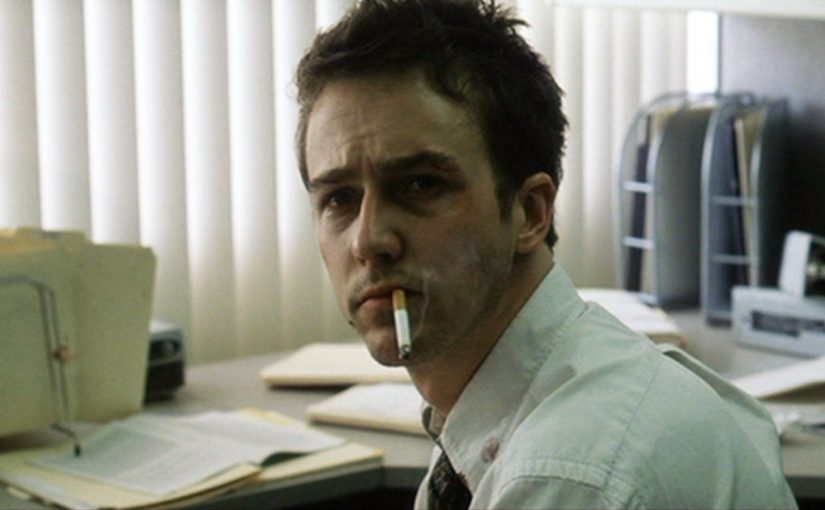
Edward Norton stars in Fight Club, the 1999 film directed by David Fincher, based on the novel by Chuck Palahniuk. Norton plays the unnamed protagonist, often referred to as "The Narrator," a disillusioned office worker who suffers from insomnia and dissatisfaction with his consumer-driven life.

In the film, The Narrator meets a charismatic and anarchistic soap salesman named Tyler Durden, played by Brad Pitt. Together, they form a secret underground fight club that grows into something far more dangerous and chaotic, challenging the norms of society and masculinity.

Norton’s portrayal of the character is central to the film’s exploration of identity, mental health, and consumerism. One of the most iconic aspects of Fight Club is the twist, where it’s revealed that Tyler Durden is actually a figment of the narrator's imagination, representing his repressed desires and frustration with his life.

The movie initially had a mixed reception but has since become a cult classic, with Norton’s performance often highlighted as a key part of its success. It explores deep psychological and societal themes, and Norton’s portrayal of The Narrator is crucial in conveying the film's unsettling atmosphere.

Edward Norton is a versatile and critically acclaimed actor known for his work in films like Primal Fear (1996), American History X (1998), and Birdman (2014). He's also known for his complex, often intense performances and his ability to dive deep into complicated characters. Born on August 18, 1969, in Boston, Massachusetts, Norton is the son of an environmental lawyer and an educator, which shaped his worldview and his sense of social responsibility.

When it comes to Fight Club, Norton was drawn to the project for several reasons. First, he was intrigued by the depth and complexity of the character, The Narrator. The script, written by Jim Uhls, adapted from Chuck Palahniuk’s novel, presented an opportunity to portray a character who undergoes a significant psychological transformation. The Narrator starts as a disillusioned, insomniac office worker and gradually descends into a state of psychological unraveling that mirrors the broader themes of the film—consumerism, identity, and masculinity.

Norton was also attracted to the film's provocative and unconventional narrative. Fight Club challenged societal norms and explored controversial subjects, which appealed to his desire to be part of something that was pushing boundaries. He has often spoken about the film's subversive elements, and how it was unafraid to tackle ideas about modern life, materialism, and the male experience in a hyper-competitive world.

One of the key elements that drew Norton to the role was his admiration for the source material. He was a fan of Chuck Palahniuk's novel before the film project came up, feeling that the book was an interesting exploration of the tension between personal fulfillment and societal expectations. Norton has mentioned that the character's internal conflict resonated with him personally—he found the psychological arc fascinating and wanted to dive into the deeper, darker aspects of the character's psyche.

Additionally, working with director David Fincher was another important draw. Fincher had already established himself as a master of dark, stylish, and visually striking films like Se7en (1995), and Norton was eager to collaborate with him. The opportunity to work with Brad Pitt, who played the role of Tyler Durden, was also a factor. The dynamic between the two characters—one representing chaos and freedom, the other embodying control and order—was a compelling challenge for both actors.

While Fight Club didn't initially find widespread commercial success and was somewhat polarizing in its release, it later became a cult classic. Norton’s performance was widely praised, particularly for the way he captured the protagonist's gradual descent into madness, confusion, and self-destruction.

Norton’s decision to take on Fight Club was driven by his attraction to the story’s exploration of identity, his fascination with the book’s dark themes, and his desire to work with a talented team on a unique and challenging project.

About Brad Pitt and Fight Club

brad pitt and what made him want to star in fight club

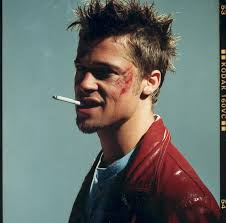
Brad Pitt’s role as Tyler Durden in Fight Club is one of his most iconic and defining performances. Tyler Durden is the charismatic, anarchistic, and rebellious character who leads the underground fight club that the protagonist (played by Edward Norton) becomes involved with. Tyler is bold, confident, and unapologetically anti-establishment, offering a radical contrast to the protagonist’s initial numb, consumer-driven existence.

Pitt’s portrayal of Tyler helped to elevate the film to cult classic status. His performance exudes a magnetic, larger-than-life energy that perfectly matches the character’s philosophy of rejecting societal norms and embracing chaos. Tyler represents freedom, strength, and the rejection of materialism, making him a complex and controversial figure in the film.

A key aspect of the character is the relationship between Tyler and Norton’s character. Initially, Tyler seems like a mentor or savior to the narrator, someone who shows him how to break free from the shackles of a monotonous, consumerist life. As the film progresses, the nature of Tyler’s influence on the protagonist grows darker, leading to the film's famous twist, where it is revealed that Tyler is, in fact, a figment of the narrator’s imagination—a representation of his repressed desires and frustrations.

Pitt’s portrayal of Tyler Durden was a sharp contrast to his more traditional leading-man roles at the time, adding layers of depth to the character. Tyler’s charm, wit, and reckless abandon are offset by his eventual descent into dangerous nihilism. Pitt captured the essence of a man who both inspires and manipulates others, all while remaining enigmatic and unpredictable.

The role also helped solidify Pitt’s reputation as an actor who could handle both big-budget action films and more complex, thought-provoking material. After Fight Club, Pitt’s career took on even more diverse projects, from historical epics like Troy (2004) to more introspective roles in films like The Tree of Life (2011) and Moneyball (2011).

Tyler Durden remains one of Brad Pitt’s most memorable characters, not only because of his bravado and sharp wit but also because of how his role in the story challenges the audience's perceptions of masculinity, freedom, and self-destruction. It’s a role that showcases Pitt’s range and his ability to portray complex, morally ambiguous characters with depth.

Brad Pitt’s decision to take on the role of Tyler Durden in Fight Club was influenced by a combination of factors, ranging from the character's complexity to his desire to challenge himself as an actor.

Pitt, at the time, was already one of Hollywood's biggest stars, known for roles in films like Thelma & Louise (1991), Legends of the Fall (1994), and Seven (1995). His career was marked by his good looks and roles as a heartthrob, but he was increasingly drawn to more challenging and unconventional roles. Fight Club represented an opportunity to break away from his typical leading-man image and portray a character who was entirely different: anarchistic, chaotic, and, in many ways, destructive.

The Appeal of Tyler Durden

Tyler Durden is a complex, charismatic figure who challenges societal conventions and pushes the limits of what it means to be free and "alive" in a consumer-driven world. The character's anti-establishment views and rejection of materialism resonated with Pitt, who has always been interested in exploring deeper, darker themes. In interviews, he has spoken about being intrigued by Tyler’s philosophy and the way the character is both a liberator and a manipulator, showing different shades of rebellion and moral ambiguity.

The Script and Director David Fincher

The script for Fight Club, adapted from Chuck Palahniuk's novel by Jim Uhls, was unconventional, edgy, and deeply philosophical. Brad Pitt was particularly drawn to the script’s subversive tone and its exploration of masculinity, self-destruction, and identity. He saw it as an opportunity to work on a film that challenged the audience's expectations and dealt with complex psychological and societal themes.

Pitt was also excited about the opportunity to work with David Fincher, a director who had already proven himself with dark, visually striking films like Seven (1995). Fincher’s approach to storytelling and his unique cinematic style were a big draw for Pitt, who was looking for a director capable of handling the psychological intensity and complexity of the Fight Club material.

Breaking from Hollywood Expectations

By the time Fight Club came around, Pitt was already an A-list actor, but he wanted to take risks and do something that would push him as an artist. In a sense, Tyler Durden offered a chance for him to subvert the traditional roles he was known for. Rather than playing the typical action hero or romantic lead, Pitt got to embrace a darker, more enigmatic figure who wasn’t just physically strong but also mentally and emotionally complex.

He was also intrigued by the character’s philosophy—Tyler's reckless embrace of chaos and his ability to inspire others. This philosophical underpinning of the character gave Pitt something to sink his teeth into, providing layers to the role that went beyond just playing a "bad boy."

Working with Edward Norton

The dynamic between Pitt’s Tyler Durden and Edward Norton’s unnamed protagonist (the Narrator) was another element that attracted Pitt to the project. The relationship between the two characters, one that evolves from friendship to something far more dangerous, became central to the film’s exploration of identity and self-destruction. Pitt has often spoken about the chemistry he had with Norton, which helped elevate the film’s dramatic tension.

The Legacy of Fight Club

Despite its mixed reception upon release, Fight Club has since become a cult classic. The film’s themes of nihilism, anti-materialism, and masculinity resonate with audiences who feel disconnected from societal norms. Pitt’s portrayal of Tyler Durden helped solidify him as an actor willing to take on roles that defy typical Hollywood conventions. It also cemented his ability to tackle complex, multi-dimensional characters that leave a lasting impact.

Ultimately, Pitt’s decision to take on Fight Club was driven by a desire to explore a challenging and unconventional role, work with a visionary director, and push the boundaries of his career in a way that kept him engaged as an actor and artist.